
People come to dream interpretation looking for meaning. What they don’t always realize is that their dreams aren’t waiting around for them to interpret them — they’re already doing something. The meaning is the byproduct. The process is the point.
Want to go deeper?
Master the Art of Dream Interpretation
Learn the proven DREAMS 1-2-3 method used by thousands of dreamers — from the author with 25,000+ interpretations at r/dreams.
That process is healing. Not in a vague, mystical sense — in a concrete, observable one. You can track it across dreams over time. You can see where a dreamer is stuck and where they’re moving. You can watch the unconscious build a bridge from where someone is to where they need to go, one dream at a time.
On the Dreams That Shape Us podcast we’ve explored the healing work of body, mind and spirit through dreaming, so watch for the links below so you, too, can do this work.
The body talks in dreams before your doctor does
Angela’s episode — “The Dream Doctor Is In” — is one of the more unusual ones in our catalog. She was dealing with challenging health issues and couldn’t get to the bottom of them through conventional medicine alone. Her dreams started producing food-specific imagery that felt pointed and meaningful.
She listened. The dreams weren’t diagnosing her — don’t misread this — but they were tuning her attention toward something she needed to pay attention to. The body-mind connection runs in both directions: your physical state influences your dreams, and your dreams can surface information about your physical state that your conscious attention has missed.
Leilani’s story works the same axis. She has an autoimmune condition — hypothyroid — and her dreams eventually gave her a way to understand it not just medically but as part of a larger pattern: ancestral inheritance, collective fragmentation, and the warrior’s credo of facing it anyway. “The First Sword Draw” is one of those episodes where you can hear someone’s relationship to their illness change in real time.
How dreams work trauma
Trauma is a word that gets used loosely, but in the dreamwork context it has a specific shape: something happened that was too large or too threatening for the psyche to process in the moment, so the processing got deferred. The event is stored in a way that keeps it live — active, charged — rather than metabolized and integrated.
Dreams are one of the primary mechanisms for that metabolization. This is established neuroscience, not just Jungian theory. REM sleep is where emotional memory processing happens, and it happens through the mechanism of imagery and story — exactly the mechanism of dreaming.
Dr. Katherine Lawson’s story in “Out of the Cave” is as clear a demonstration of this as I’ve seen. She experienced childhood sexual trauma, and for years a recurrent nightmare kept circling it. Not to torture her — to keep trying to work it. The nightmare wasn’t the wound; it was the unconscious attempting to heal the wound. When she finally did the work to engage with what the nightmare was doing rather than just enduring it, the recurrent dream transformed and the healing could proceed.
Lawrence’s episode — “The Burning Man and the Warrior’s Way Home” — shows the same pattern in a veteran’s context. PTSD produces a well-documented dream signature. What Lawrence’s story adds is the mythic dimension: that a veteran’s return home isn’t a physical event. It’s a soul event, and the dreams are the map.
The wounds you didn’t know you were carrying
Mary Jo Heyen’s three dreams in “Dreams Never Abandon Us in Our Grief” uncovered pockets of unfelt grief that she didn’t know were there. She used a phrase I’ve thought about many times since: “We don’t get to do this a la carte — if I’m frozen to my pain, I’m also frozen to my joy.” The unconscious knows this. It holds both.
Harper’s story — the very first episode, “Back to the Life I Know” — is about healing in the most literal sense: his dreams showed him a future where he could live again with health and vitality. The dreams progressed throughout an entire month of returning to the same theme to show him he really could recover from a heart condition. They gave him the direction, the image of what was possible. Sometimes that’s enough to change what the body does next.
What makes the difference
The dreamers whose healing moved forward had one thing in common: they engaged. They didn’t just record the dream and file it. They brought it to someone, or they sat with it long enough to let it teach them something. Harper found me at r/dreams at reddit.com because of my reputation as a dream worker and asked about the incredible series of dreams that led him to a personal revelation, and the work we did on his dreams shaped his life from that point onward. Truly inspirational.
After years of regular dream work I can wake up from a dream and start tracing it to find what it can offer for my healing and growth. And because of that familiarity I can quickly pull from the dream content what I need to know. In one recent dream, I observed my chiropractor working on someone and saying “vocalize.” One word, that’s it, and with some reflection I knew exactly what the dream pointed to in myself. I was the one who needed to vocalize, or be the voice, for a part of my body that had been hurting. The part of my body I’d gone to see that chiropractor for help with. Vocalizing its needs meant it no longer had to speak to me through pain.
You don’t have to be in therapy to do this work. Start with writing the dream down, noticing the emotional residue it left, and asking honestly: what is this dream circling? That question, held with enough patience, usually finds its answer.
The Dreams That Shape Us podcast goes deep into stories like these — real people, real dreams, real healing. Find it on Spotify, Apple Podcasts, or at dreamsshapeus.com.
To learn the DREAMS 1-2-3 method for working your own dreams — including the ones that feel like they’re working on you — visit dreams123.com.

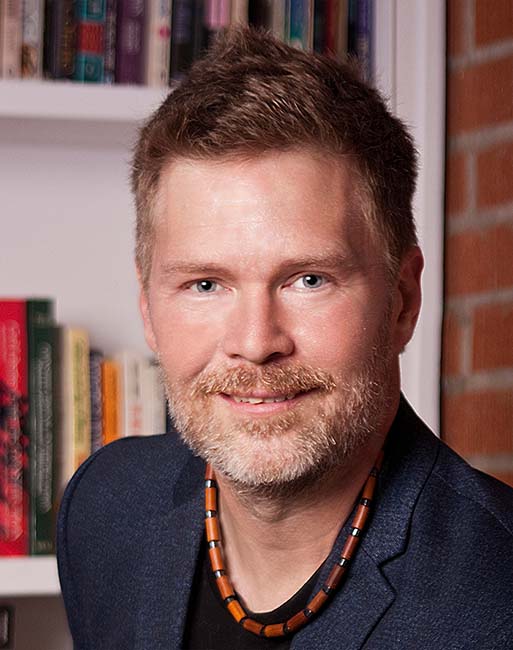
About the Author
J.M. DeBord — known online as RadOwl — has published over 25,000 dream interpretations at r/dreams, Reddit’s largest dreaming community, which he has moderated since 2014. He is the author of DREAMS 1-2-3: Three Steps to Interpret Dreams and The Dream Interpretation Dictionary. Recognized by the International Association for the Study of Dreams. Former dream expert-in-residence at Canyon Ranch Spa Tucson. Featured in The Guardian and a recurring guest on Coast to Coast AM.
Leave a Reply