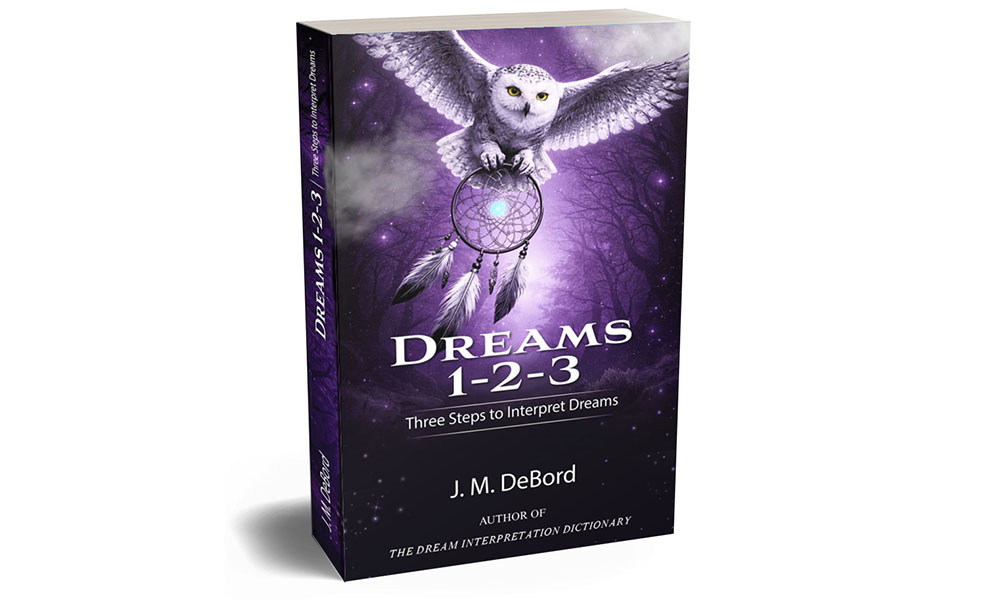
Easy to follow and loaded with examples. It answers just about every question you’ve ever had about the interpretation and analysis of dreams. Does that sound to you like the best book about dream interpretation?
Want to go deeper?
Master the Art of Dream Interpretation
Learn the proven DREAMS 1-2-3 method used by thousands of dreamers — from the author with 25,000+ interpretations at r/dreams.
Saying something is the best invites the question: compared to what? As a connoisseur of books about dream interpretation, I won’t say DREAMS 1-2-3: Three Steps to Interpret Dreams surpasses every book I love — Robert Johnson’s Inner Work, Linda Schiller’s Modern Dreamwork. Great books — but written for a different reader than the one I had in mind. The readers who love my book come for exactly what I described above: easy to follow, loaded with examples, answers their questions.
See, I had a certain reader in mind from day one. I know who they are because I’ve spoken with thousands of people about their dreams and fielded their questions. They’ve told me why other books about dream interpretation didn’t get them much closer to actually understanding their dreams. They’re in a grey zone: past the basics, not interested in wading through academic theory. Books that are too simple bore them by rehashing what they already know. Books that lean too hard on Freudian or Jungian concepts leave them more lost than when they started.
Speaking of which — take a look at the Amazon bestseller chart for dream books and you’ll see Freud’s The Interpretation of Dreams at #13, and my Dream Interpretation Dictionary at #16. How does a book first published in 1899 still rank that high?

It happens because people assume Dr. Freud is the authority on dreams, and technically he is — he’s the father of modern psychoanalysis. But his book was written for psychiatrists of his era, not for people today who just want to understand their dreams. Read it and try to apply what you learn, and I’ll bet you end up more confused than enlightened, especially without an existing base of knowledge to build on.
I say that as someone who’s read it. Freud was actually the second book I read on this subject — Jung’s Dreams was first — and while I loved where Jung pointed, what he was describing seemed so out there that it might as well have been written in a foreign language. Neither book gave me what I actually needed at the time. Though I’ll say this: 75% of what I teach about dreams these days ultimately traces back to grandpa Carl.
DREAMS 1-2-3 is the book I wish I’d had 30 years ago when I set out to learn everything I possibly could about dream interpretation. What makes it different isn’t the research behind it — it’s that the research is digested, tested across thousands of real dreams, and delivered in a form you can actually use starting today.
The three steps aren’t theoretical. I’ve applied them — to Reddit dreamers, to private clients, to my own dreams — and refined them until they worked every time, not just when the dream handed you the answer on a platter.
Step 1 teaches you to read dream-speak — the symbolic language encoded in every dream you’ve ever had. Your dreams don’t tell you things directly; they show you things through images, characters, and scenarios that carry personal meaning. Step 1 gives you the key to decode them, and it starts with a question most books never ask: how imaginative is this dream?
I call this the imagination level, and it’s where interpretation actually begins. Every dream falls somewhere on a spectrum from highly realistic to highly imaginative — from scenes that could have been lifted from your waking life to settings and events that couldn’t exist outside your sleeping mind. That difference isn’t random. The dreaming mind has reasons for choosing realism over imagination, and reading those reasons points you in the right direction before you’ve decoded a single symbol.
Take a work dream. If the setting is vaguely work-like — a generic office, unfamiliar coworkers, a boss who doesn’t look like your actual boss — that imaginative quality usually signals the dream is looking inward. The “work” is a metaphor for working on yourself: your habits, your growth, your inner life. But if someone tells me “the setting was exactly my office, my actual desk, my real colleagues,” that realism points outward — toward something genuinely happening at work. The interpretation shifts completely. You’re not searching inside yourself for the source; you’re searching your actual circumstances.
This is what I call reverse engineering the dream’s construction. Most approaches take dream content at face value and decode symbol by symbol. The imagination level teaches you to read the dream’s architecture first — so you know which direction to look before you start looking.
Step 2 is the bridge between symbol and waking life. What is the dream responding to? What situation, feeling, or question did your unconscious mind decide was worth staging a nightly production about? This is where most interpretations break down — people identify a symbol without connecting it to anything real. Step 2 closes that gap.
Step 3 is where the insight lands. Connect the dots. You’ve read the symbol, you’ve matched it to your life — now you see what the dream is telling you and why. This is the moment my readers describe as the one that changes everything. Not because the interpretation is always dramatic, but because once you get it, you can’t un-get it. Dreams stop being random noise and start being one of the clearest signals most people never learn to read.
“It teaches the difference between subjective symbolism and objective content — something most dream books never address.”
Amazon verified reader
That’s the real gap most dream books leave open. They tell you what a snake “means” in a dream without teaching you how to figure out what that snake means in your dream — given your life, your emotional state the night you had it, the specific story your unconscious mind chose to tell. The distinction is everything, and it’s built into every step of this book.
That’s the book. If you’re the reader I had in mind — past the basics, done wading through theory, ready to actually do this — it was written for you.
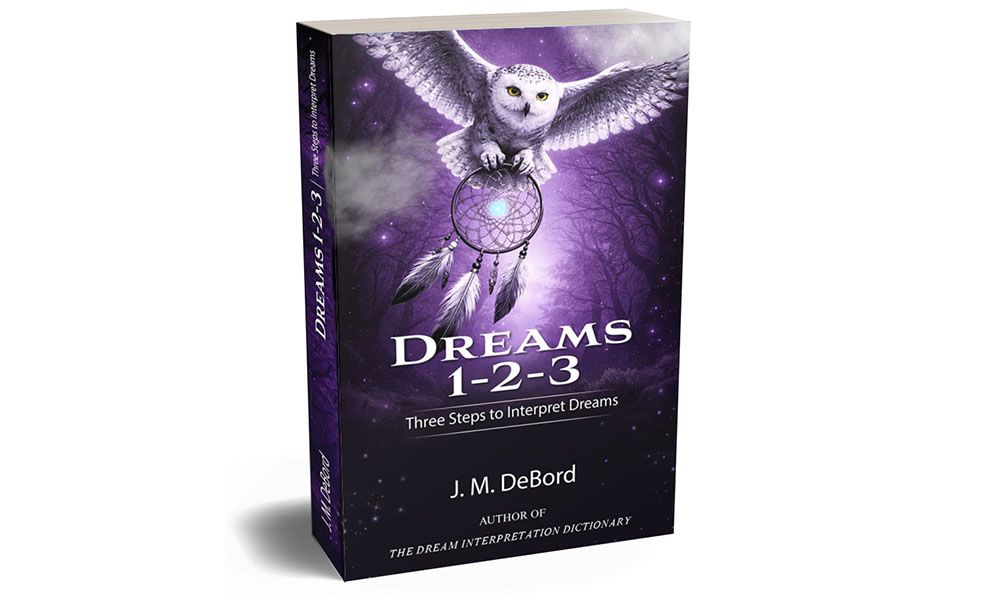
https://www.amazon.com/DREAMS-1-2-3-Three-Interpret-Dreams/dp/B0GNK55B15


About the Author
J.M. DeBord — known online as RadOwl — has published over 25,000 dream interpretations at r/dreams, Reddit’s largest dreaming community, which he has moderated since 2014. He is the author of DREAMS 1-2-3: Three Steps to Interpret Dreams and The Dream Interpretation Dictionary. Recognized by the International Association for the Study of Dreams. Former dream expert-in-residence at Canyon Ranch Spa Tucson. Featured in The Guardian and a recurring guest on Coast to Coast AM.
Leave a Reply