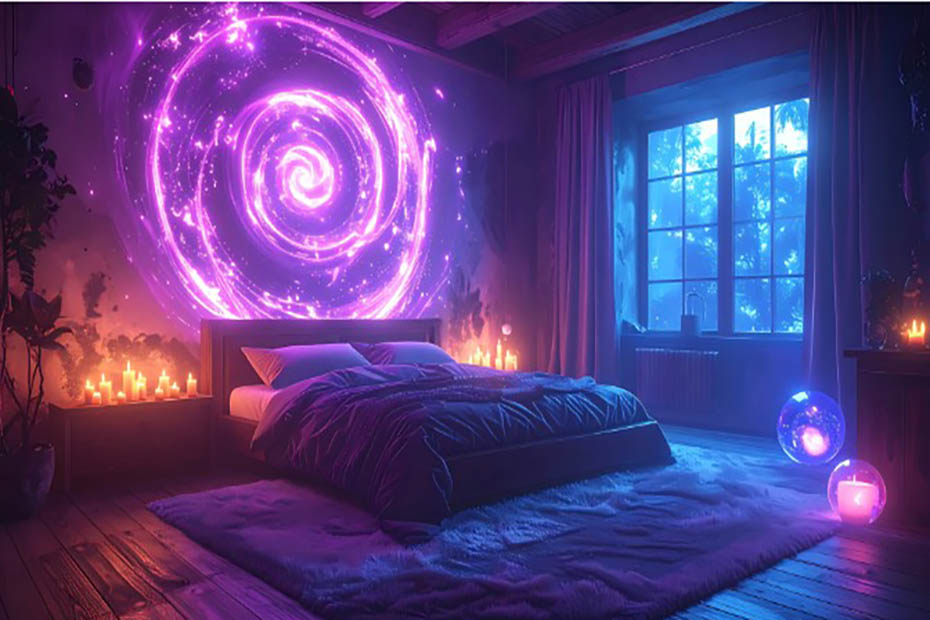
Everyone wants to fly once they realize they can as a starting point with lucid dreaming — the idea that once you’re aware you’re dreaming, you can do anything. Control the environment. Conjure the desired scenario. Run wild in a “consequence-free” space that’s entirely yours. So, no consequences if you fall out of the sky in a lucid dream, you wake up and life goes on.
Want to go deeper?
Master the Art of Dream Interpretation
Learn the proven DREAMS 1-2-3 method used by thousands of dreamers — from the author with 25,000+ interpretations at r/dreams.
That ‘you can do anything’ framing isn’t wrong. It’s just incomplete. And the part it leaves out is the part that makes lucid dreaming actually worth the practice it usually takes to make it happen consistently and do more than just have fun with it.
Here’s what most lucid dreaming guides don’t tell you: the dream, or the dreaming mind (the unconscious mind) has its own agenda. You can achieve awareness within the dream state and still find that the dream isn’t particularly interested in handing over the controls. The deeper you go into the practice, the more you encounter a layer of the unconscious that isn’t waiting for your permission or your direction, or even your permission. It has something it wants to show you, and it will find ways to make that happen whether you’re lucid or not. But in a lucid state you can greatly accelerate the process of growth that makes you a good partner for the dreaming mind.
Now we’re talking! On the Dreams That Shape Us podcast we’ve interviewed guests who’ve taken lucid dreaming to ‘next-level’ heights. Next, let’s get the rundown and links to those episodes so you, too, can tap, utlilize and develop this incredible potential.
The full sensory dimension of the dream state
Ian Wilson has spent years working on a specific problem: most lucid dreamers operate in a visually dominant state. They can see the dream, but the other four senses — touch, sound, taste, smell — are flattened or absent. His research and practice have focused on reactivating those neural pathways within the dream state.
The reason this matters isn’t just that a fuller sensory dream is more vivid. It’s that the sense data carries more information. A dream where you can smell the rain or feel the texture of a surface is a dream where the unconscious has more channels to communicate through. Ian shared dreams in “Return of the Dream Jedi” that illustrate what this practice produces — including a prophetic dream that he’s convinced saved his and his daughter’s lives.
What sleep paralysis is actually telling you
Sleep paralysis gets treated as a bug in the system — a terrifying malfunction where you’re awake but can’t move, and something awful is often in the room with you. But if you’re someone who experiences sleep paralysis regularly, it’s worth knowing that you’re in a liminal state that many experienced practitioners deliberately cultivate as a portal into the lucid dream state.
Ryan Hurd covered this with unusual depth in “The Power of Dreams Compels You.” He’s one of the most careful researchers working at the intersection of sleep science, phenomenology, and dreamwork, and his work on generational trauma and core wounds within the lucid dreaming context goes somewhere most lucid dreaming content doesn’t.
The lucid dream that demanded something
Steve Ernenwein’s episode is the one that changed how I think about the instruction that sometimes arrives in the lucid state. He received what he’d call a directive — a clear, unmistakable message in a lucid dream about what he needed to do to come into his power. Not a suggestion. A mandate.
The experience opened an initiatory process in his life that he describes as the most significant thing that’s happened to him, and the guiding myth that holds the whole journey together is the story of the Grinch — not a hero myth, not a warrior myth, but the story of a heart that had to break open before it could grow. “If You Want to Come Into Your Power” is one of the bravest episodes in the catalog.
When the synchronicities start
Bob’s episode — “You Are Not Ever Alone” — sits at the edge of where lucid dream research and extraordinary experience meet. He literally wrote books about the science of dreaming, and he found himself in a synchronicity so precisely constructed around a lucid dream that calling it coincidence required more intellectual effort than just acknowledging what happened. His concept of “the body unconscious network” — the idea that dreaming minds may be in some kind of contact with each other — is the kind of hypothesis that sounds outlandish until you’ve heard enough stories like Ian’s, like Rochelle’s, like Cougar and Mariah’s.
I’ve been blessed with good teachers. Ian, Steve, and Ryan taught me to see lucid dreaming as more than just something to have fun with. The fun parts pull you in and make you want to go further. Those episodes are full of insights and tips you can put to use right away in your dream life, not just lucid dreaming but being conscious of yourself and everything you are. The point isn’t to convince you that lucid dreaming is magic. The point is that it’s deeper than flying. The standard pitch for lucid dreaming skims the surface because the surface is sellable. What’s below it is stranger, harder, and considerably more interesting.
The video below is my interview with Steven Rogat about his approach to lucid dreaming, informed by his immersion in the shamanic practices of Carlos Castaneda. Our focus is on creating the right mindset and approach first, then learn the practices that lead to better overall dreaming, including the lucid kind.
Dreams That Shape Us explores the full depth of the dream state through real stories. Find us on Spotify and Apple Podcasts, or visit dreamsshapeus.com to browse every episode.
The DREAMS 1-2-3 method works whether you’re lucid in the dream or just trying to understand it afterward. dreams123.com
Dream Interpretation: Visits from Dead Parents & Loved Ones

About the Author
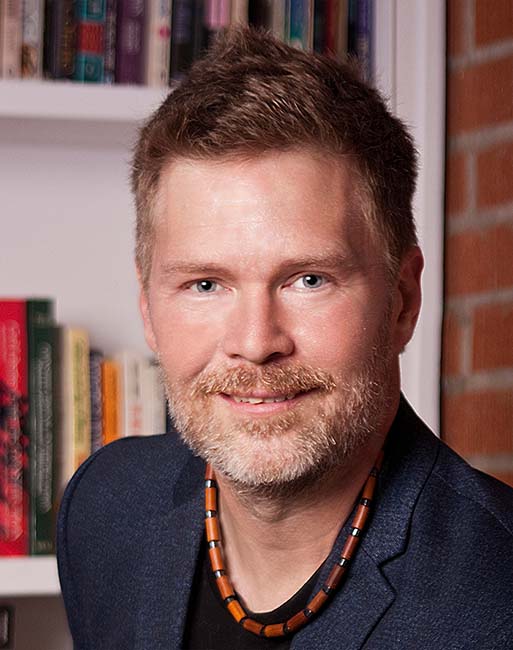
J.M. DeBord — known online as RadOwl — has published over 25,000 dream interpretations at r/dreams, Reddit’s largest dreaming community, which he has moderated since 2014. He is the author of DREAMS 1-2-3: Three Steps to Interpret Dreams and The Dream Interpretation Dictionary. Recognized by the International Association for the Study of Dreams. Former dream expert-in-residence at Canyon Ranch Spa Tucson. Featured in The Guardian and a recurring guest on Coast to Coast AM.
Leave a Reply